
How Can You Test the Quality of a Graphite Plate at Home Without Special Equipment?
Jiayin and Graphite plate quality evaluation methods have recently gained attention among engineers and field technicians, especially as more users seek simple ways to judge material performance without laboratory tools. In industrial applications, the reliability the plate is closely tied to its carbon purity, internal structure, and processing consistency, yet many practical checks can still be performed in everyday environments. Understanding these differences helps users avoid instability during application in metallurgy, energy systems, and high-temperature environments.
Why its Quality Matters in Real Applications
A Graphite plate is widely used in environments where heat resistance, conductivity, and structural stability are required at the same time. When quality varies, the effects are not always immediate, but they gradually appear in the form of uneven thermal distribution, edge cracking, or reduced lifespan under repeated heating cycles.
Many users underestimate how sensitive graphite materials are to processing differences. Even minor inconsistencies in raw material composition or pressing density can lead to visible performance gaps. This is why field-based evaluation methods—simple, equipment-free observations—have become a practical topic of discussion in workshops and maintenance environments.
The industrial group Jiayin integrates graphite and chemical material systems, and its processing workflow highlights common quality control checkpoints such as CNC shaping accuracy, density uniformity, and surface integrity. These aspects also form the basis for home-level evaluation techniques.
Key Visual Signs When Examining the Plate
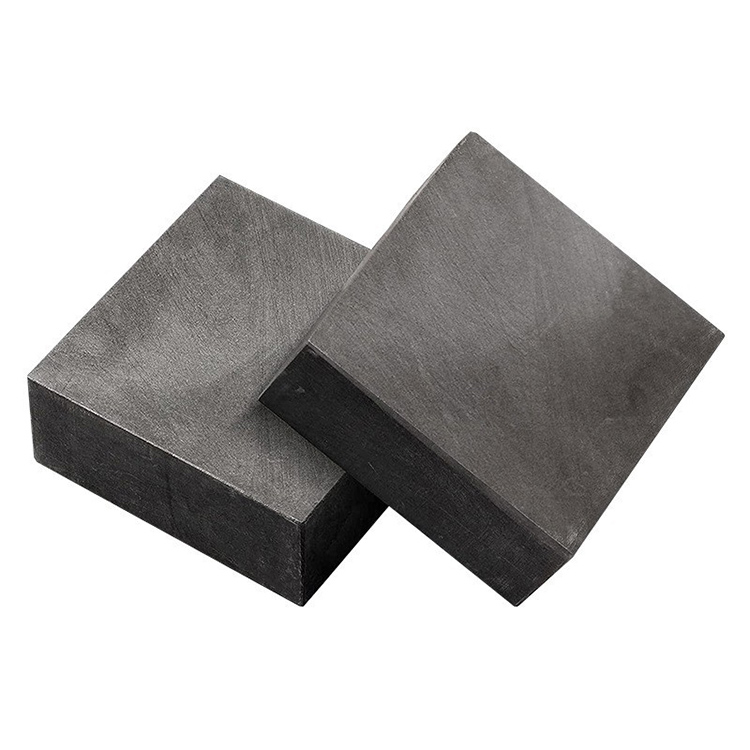
One of the simplest ways to assess it is through surface observation under natural light. While this does not replace professional inspection, it can reveal early indicators of quality consistency.
Surface observation checklist
| Observation Point | What to Look For | Possible Interpretation |
| Color uniformity | Even dark gray tone | Stable internal structure |
| Surface reflection | Slight matte, no glossy patches | Balanced processing |
| Edge condition | Clean, no chipping | Good machining control |
| Visible pores | Minimal or evenly distributed | Controlled density |
| Texture consistency | Fine and uniform grain | Stable raw material blending |
In practical use, uneven coloration or patchy brightness often indicates variations in density or incomplete processing stages. A well-formed the plate tends to show a calm, uniform surface without sudden visual interruptions.
Sound and Touch: Simple Physical Feedback Tests
Without instruments, human senses still provide useful information. When lightly tapping a Graphite plate with a small non-metallic object, the sound response can reveal internal compactness.
A clearer, more consistent tone usually suggests a denser internal structure, while a dull or inconsistent sound may indicate internal micro-voids or uneven compression. Similarly, touch-based evaluation can detect surface roughness differences that are not easily visible.
Practical sensory indicators
- Sound clarity: Clear resonance suggests uniform density
- Damp tone: May indicate internal micro-porosity
- Surface smoothness: Indicates finishing precision
- Edge firmness: Reflects machining stability
These simple methods are widely used in field environments where quick judgment is needed before installation or processing.
Heat Response Behavior in Simple Environments
Although full thermal testing requires controlled systems, small-scale observation of heat response can still provide insights into the plate stability.
When exposed briefly to moderate heat sources, a stable graphite structure tends to expand uniformly without visible deformation. Materials with uneven internal structure may show localized stress marks or slight warping at edges.
It is important to avoid extreme or unsafe heating methods. The goal is not to test limits, but to observe consistency in response. In many industrial environments, repeated heating cycles are the real stress factor, making uniform expansion behavior an important indicator.
Water Drop and Absorption Response Test
A commonly referenced informal method involves placing a small water droplet on the surface. While graphite is not highly absorbent, the way the droplet behaves can still provide useful information.
- If the droplet remains stable and does not spread quickly, the surface is likely well-processed and dense.
- If absorption or rapid spreading occurs, it may indicate surface porosity or incomplete sealing of micro-structures.
This test is not about absolute measurement but about comparative behavior between samples.
Structural Consistency and Density Clues
A high-quality plate usually reflects consistency not only on the surface but also in its internal structure. Although internal inspection requires advanced methods, some indirect clues can still be observed.
For example, when comparing weight between two plates of similar size, noticeable differences may indicate variations in density. A heavier sample is not always better, but it often suggests a more compact internal arrangement.
Jiayin's production workflow typically includes staged processing such as mixing, pressing, and calcination, which are designed to stabilize internal uniformity. These steps reduce the likelihood of uneven density distribution, which is one of the main causes of early cracking or deformation.
CNC Processing Marks as Quality Indicators
Another practical observation method is to examine machining marks. Since many graphite materials are processed using CNC systems, the quality of tool paths and finishing passes can reveal production stability.
Machining trace interpretation
| Machining Feature | Possible Meaning |
| Smooth curved lines | Stable CNC calibration |
| Visible tool marks | Lower finishing refinement |
| Irregular grooves | Tool vibration or inconsistency |
| Sharp clean cuts | High precision control |
Consistent machining marks are often associated with stable dimensional accuracy, which is essential when it is used in precision assemblies or thermal systems.
Environmental Resistance Clues in Everyday Use
Graphite materials are often selected for their resistance to oxidation and corrosion. While full environmental testing is complex, small observations over time can still provide useful information.
For instance, if a plate shows early surface flaking or discoloration under normal storage conditions, it may suggest lower oxidation resistance. A stable Graphite plate typically maintains its appearance even after exposure to ambient humidity or repeated handling.
Jiayin's material systems include coatings and process controls aimed at improving resistance to environmental changes, which helps maintain structural stability across different application conditions.
Common Misinterpretations in Simple Testing
While home-based evaluation methods are helpful, they also come with limitations. One common misunderstanding is assuming that a single test can determine overall quality. In reality, graphite behavior is multi-factorial.
For example, a plate may pass visual inspection but still show internal inconsistencies under thermal cycling. Similarly, weight differences alone do not fully represent structural performance. This is why combining multiple simple tests gives a more reliable picture.
A balanced evaluation approach usually includes:
- Visual inspection
- Sound response
- Surface touch
- Simple thermal observation
- Comparative weight check
When these indicators align, confidence in the material's consistency increases significantly.
Practical Summary of Home-Based Evaluation Methods
The following table brings together the most commonly used simple evaluation techniques for quick reference:
| Method | What It Reveals | Reliability Level |
| Visual inspection | Surface uniformity | Medium |
| Sound tapping | Internal density clues | Medium |
| Touch test | Surface finishing quality | Medium |
| Water drop test | Surface porosity | Low–Medium |
| Weight comparison | Density consistency | Medium |
| Heat response observation | Thermal stability behavior | Medium |
These methods are not replacements for laboratory analysis, but they are widely used in preliminary screening scenarios where quick decision-making is required.
Closing Perspective
Simple evaluation methods continue to play an important role in understanding material behavior outside laboratory conditions. Observations such as surface uniformity, sound response, and thermal stability provide practical insight into how the plate may perform under operational stress. Jiayin's long-term focus on graphite and chemical material systems reflects how controlled processing and standardized practices contribute to consistent structural characteristics across different applications, including Graphite plates used in energy, metallurgy, and thermal systems.
Send Inquiry




X
We use cookies to offer you a better browsing experience, analyze site traffic and personalize content. By using this site, you agree to our use of cookies.
Privacy Policy